
#CuriousTitans: Top 10 Books of 2025
Every year, my reading leaves behind a trail of ideas some fade, some stay, and a few quietly change how I think, decide, and act. These Top 10 Books of 2025 are not just “good reads”; they are books that stayed with me long after the last page. Some challenged my assumptions and some softened my judgments. If I had to recommend just ten books from the year gone by; books worth your time, attention, and reflection it would be this list.
1. “Poor Economics for Kids” by Esther Duflo and Cheyenne Olivier
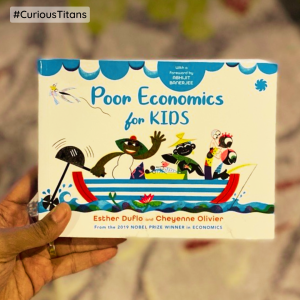
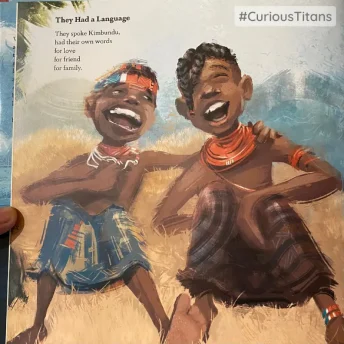
Poor Economics for Kids by Esther Duflo and Cheyenne Olivier is a delightful and intellectual book to read for anyone who wants to understand poverty and its impacts like a layman. In a world where information can be limited to certain like-minded groups, understanding complex topics like the economic impact of poverty is of utmost importance. Poor Economics for Kids is tailored for young readers and is the brainchild of Esther Duflo, who won the 2019 Nobel Prize in Economics along with her husband Abhijit Banerjee and Michael Kremer “for their experimental approach to alleviating global poverty”.
2. “Art of Spending Money” by Morgan Housel
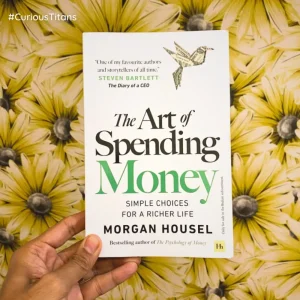
In The Art of Spending Money, Morgan Housel flips the usual money conversation, when there is a rush of reading books on earning quick and more money. Instead of obsessing over earning more or investing better, he asks a far more uncomfortable question: Are you spending your money in a way that actually improves your life? Through short, deeply relatable essays, Housel shows how spending is emotional, cultural, and personal not mathematical. This book is less about budgets and more about values. It gently reminds us that money is a tool, and if we don’t consciously decide what it’s for, we end up serving it instead of the other way around. I was a great book to be my last read of 2025.
Buy Art of Spending Money on Amazon Listen Art of Spending Money on Audible
3.“Give and Take” by Adam Grant
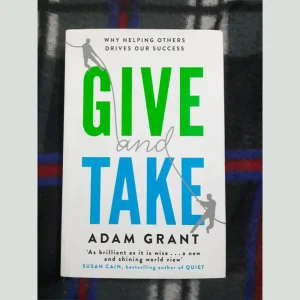
Give and Take explores a deceptively simple idea: long term success is shaped not just by talent or hard work, but by how we interact with others. Adam Grant categorises people as givers, takers, and matchers – and then surprises us by showing that givers often end up both at the bottom and at the top. The difference lies in how they give.
I always thought myself as a giver but, this book reshaped how I think about collaboration, leadership, and generosity in professional life. It’s especially relevant in today’s competitive world, where kindness is often mistaken for weakness, and yet quietly turns out to be a long-term advantage.
Buy Give and Take on Amazon Listen to Give and Take on Audible
4. “The Basic Laws of Human Stupidity” by Carlo M. Cipolla
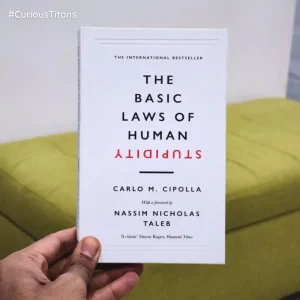
Suggested by Deepak Rai (my good friend and a great dentist), but I read it as the forward was written by none other than Nassim Nicholas Taleb. This short (probably a 1 hour read), sharp book is both hilarious and unsettling. Cipolla argues that human stupidity is not just widespread, it’s consistently underestimated. His “laws” explain why irrational actions cause harm to others and to the person acting, often without any benefit. This book powerful because it is uncomfortably accurate. You will recognise these patterns everywhere from workplaces, politics, social media to daily life. It’s a quick read, but one that permanently changes how you interpret humans; behaviour and decision-making.
Buy The Basic Laws of Human Stupidity on Amazon
Also check out: Tips on achieving yearly reading goal
5. “Nexus” by Yuval Nova Harari
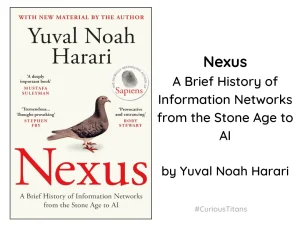
Harari the author of best selling Book Sapiens, traces a long arc. From storytelling around campfires to the rise of writing, printing, and fast-moving digital networks, to show how our ability to share information has shaped human history.
He argues that today’s AI is not just another tool, it’s the next stage of information networks, capable of acting, deciding, and reshaping reality in ways we’ve never seen.
The book invites us to ask: How do we steer a future where networks and machines hold as much power as human societies? Harari warns that our old stories, institutions and safeguards may not be enough. The key question: Can we build information systems, including AI, that serve us rather than undermine us?
Also Read From Language to AI: The Story of Information Revolutions
6. “Hidden Potential” by Adam Grant
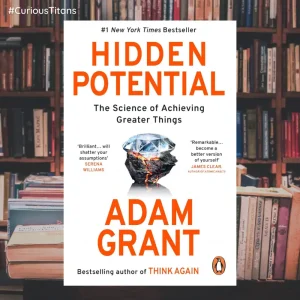
With Hidden Potential, Adam Grant shifts the focus from gifted talent to growth. Instead of asking who is talented, he asks who is becoming better. In classic Adam Grant style, this book is full of stories showing how character, discipline, and supportive systems (sometimes privilege) matter more than raw ability. Hidden potentials highlights the idea that potential is not fixed or scarce. It’s cultivated, often slowly, through deliberate effort and the right environment. A comforting and motivating read, especially for those who’ve ever felt “average” in a world obsessed with gifts of talents.
Buy Hidden Potential on Amazon Listen to Hidden Potential on Audible
7. “The Golden Road” by William Dalrymple
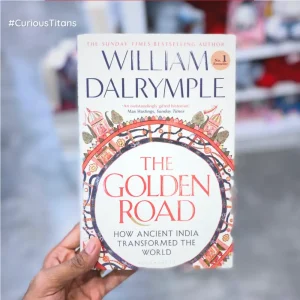
William Dalryample is one of my favourite historian. The Golden Road is a beautifully researched account of how ideas, culture, trade, and knowledge flowed out of India to the rest of the world long before modern globalization. Dalrymple dismantles the narrow, Eurocentric version of history we’ve grown used to and replaces it with a richer, more interconnected story. This book doesn’t shout; it patiently corrects. For Indian readers especially, it restores a sense of historical confidence grounded in evidence.
Buy The Golden Road on Amazon Listen to The Golden Road on Audible

8. “Anxious People” by Fredrik Backman
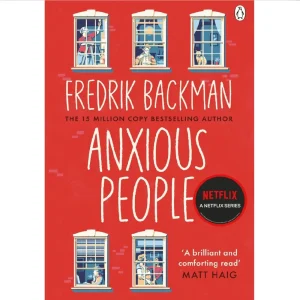
At first glance, Anxious People looks like a witty hostage drama. But as the story unfolds, it reveals itself as an exploration of loneliness, fear, regret, and human connection. Backman has a rare ability to make deeply flawed characters feel familiar rather than frustrating. You’ll laugh, pause, and occasionally feel uncomfortably seen. This book gently reminds us that most people are not difficult – they’re just carrying more than we can see.
Buy Anxious People on Amazon Listen to Anxious People on Audible
9. “Surviving Loudly” by Supriyo Chakraborty
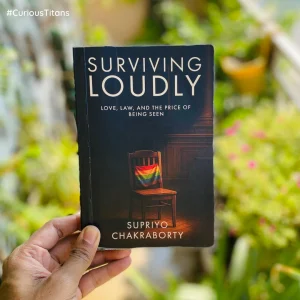
Surviving Loudly is not just a memoir; it’s a journey through silence, stigma, resilience, and finally, visibility. The book begins with the quietness of hidden chats and secret glances, and slowly grows into a voice that refuses to be silenced. Supriyo shares his life between margins – margins of law, margins of identity, and the constant negotiation between personal truth and societal judgment.
The writing is raw, tender, and hauntingly honest. At times it feels like you’re reading someone’s diary, yet at other times, it feels like you’re listening to the collective heartbeat of a community that has long been denied its place in the sun. This book is essential reading for anyone who believes in equality and dignity.
Buy Surviving Loudly on Amazon
10. “I came upon a Lighthouse” by Shantanu Naidu
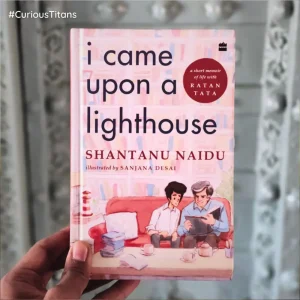
Buy I came upon a Lighthouse on Amazon Listen on Audible
If you are thinking why there are many buy now buttons, almost nudging you to click on them? Yes you are right, they are surely nudging you to click on them and buy the books if you like to read. if you have read this far, this would be your way to support the work I do. Reading books, and posting about them takes time and effort. Your small gesture to buy any book from the list, share this blog on your social media or groups, or your subscribing to my blog will be of a great help.
Subscribe to receive new posts.
Regardless, thank you for reading my blog and have a great reading time in the next year.
Also Checkout: Top 5 Books on Artificial Intelligence (AI)
Worth reading Children Books (even for grownups)
#CuriousTitans #BookList #BookRecommendation #LearningNeverEnds